Tuesday, November 15, 2016

The State of Black Politics


(Philadelphia, PA)
I went down to the crossroads,
Tried to flag a ride.
Nobody seemed to know me,
Everybody passed me by.

Eric Clapton

There is an ebb and flow of Black Politics in America which is invariably at a crossroads. Will it hold on to its past or will it be nuanced enough to engage millennials who have a disdain for the prior generations' efforts. I have heard this generation call the current crop of Black politicians “comfortable” and “soft” to explain their association with traditional Civil Rights organizations.

The “old guard” sees no structure, no purpose, and the inability to compromise from those who will take Black Politics to the next level to achieve results.  I went searching for answers during this political season.

There will be no Obama on the ballot for the foreseeable future. Will it mark the end of an era of Black Politics in America as we know it? The political conventions have ended and it’s time to assess. There are pockets of promise, new energy from the Black Lives Matter Movement, and a political class which has honed its skills based on what has worked in the past. I’m not in the business of predicting the future, so I’ve sought out experts and those who’ve been there to take the pulse of Black Politics.

From the Streets to Ballot

Before Kwiesi Mfume was a Congressman and head of the NAACP, Mfume was just another Brother on the street hustling. In the early days of the Civil Rights Movement, Mfume noted social change was pulled in different directions. He pointed to “cross purposes” associated with different groups. They included movements like the Black Panthers, the Nation of Islam, the Urban League, the SCLC, and the NAACP. “There were five different directions, but they crisscrossed and spoke. They didn’t always agree but, they spoke (to each other)…no effort was estranged. (We believed) If you had better idea on where you were moving and where other folks would be moving in terms of lifting the community,” we listened according to Mfume.

You can see this play out in the iconic photograph of Dr. Martin Luther King Jr. and Malcolm X backstage at the Audubon Ballroom. Prior to the photograph the pair spoke at length in private. No one knows what the conversation was about but, it likely centered on tactics to bring about change.

A sullen Mfume was saddened a similar conversation is not taking place informally or formally outside the glare of television cameras or in the world of social media. “Without interaction between the different movements there’s confusion,” the former Civil Rights leader opined. “You’ve got to find a way to have a common conduit where you share information, off the record.”

Marc Morial the head of the Urban League sees something that established groups have failed at “we need the next generation of people to offer themselves for public office. Where we lost ground is with the enthusiasm. We need to get the turnout we need particularly, amongst young people.”

Morial became the Mayor of New Orleans while in his 30’s. He was often mention as a potential Vice Presidential pick. He believes their needs to be an evolution. “Black Lives Matter has given young people a voice in the issues of the times. What I do hope they will do is embrace the idea that part of activism must include voting.”

Nuanced

Prof. Keith Boykin of Columbia University teaches a course on African-American Politics in the Era of Obama. “We’re in a place of transition.”

Without a clear inheritor of the “Obama Legacy” there are number of suitors including California Democratic Senator Kamalia Harris, New Jersey Senator Corey Booker and Washington, DC Mayor Muriel Bowser.  Mayor Bowser has embraced the idea of a broad tent with few of the trappings which enabled one of her predecessors, the late Mayor Marion Barry to become Mayor. He became labeled “Mayor for Life.” It was Barry who embraced the notion that Washington, DC was “Chocolate City.”

It’s less of a focus for the current mayor who’s seen the city become more “Mocha.” “We’re focused on progressive issues that will spread the prosperity to all Washingtonians,” according to Mayor Bowser.  Like Obama the new face of Black Politics is race conscious only when it matters and absent the tough talk of “payback” for past transgressions.


Prof. Boykin picks up on this idea of less racial identity. The political observer notes that African-Americans  have known for a long time the prize was the Presidency. That box has been checked with the election of Barack Obama.  “Just electing a President isn’t enough anymore, not that it ever was…nor is it enough to assume a political figure in the Civil Rights community will be able to move the larger African-American community because the community is becoming increasingly diverse.” The political professor says the “messiah complex” needs to change.  “We have people all across the country with different backgrounds.” Despite these differences he sees promise on the horizon. The days of pointing to a single person as the face of Black Politics is in the review mirror. Boykin points to a new “third wave, that’s happening now…of people who aren’t going through traditional politics.” 

Tame or Encourage

Dayvon Love is a millennial. Love is a founder of a Baltimore based grassroots organization called Leaders of a Beautiful Struggle. Before Baltimore’s Freddie Gray’s death, they were working with youth in marginal communities in the city. 

“It wasn’t a single moment” which sparked his activism. He remembers how he and his peers were affected by Jena Six in 2007 (Six Black High School students in Jena, Louisiana were arrested and charged with a assaulting a white student in December of 2006). There were a lot of question about equal justice after several white students were suspended after being in fights but the Black students were arrested. “There were legitimate conversations” occurring especially in during Senator Barack Obama first run for President.

Love and several of his colleagues are intrigued by the possibility of working with established politicians hoping to learn the ropes. He found skepticism, “younger Black folks lump older politicians into one group, but there are many strata.”  

He points to how the older folks have different opinions of Black Lives Matter. “The old guard are fearful.” Instead of nurturing the next generation they seem more concern about “challenging the young on being successful.” Conversely, he knows a “lot of older folks, know where he’s coming from.” The community organizer points to a number of established politicians locked in on their “self-interest.”

Where this younger group has an advantage over the “old guard” is it’s embrace of new technology and their ability to find unlikely partners. Organizing via the internet is millennials tool of choice. From Facebook, YouTube, Instagram, Twitter, Snapchat, and Periscope the early adoption of these new technologies allows this group the ability to link with like-minded individuals who aren’t Black and may be outside the traditional Civil Rights Movement.
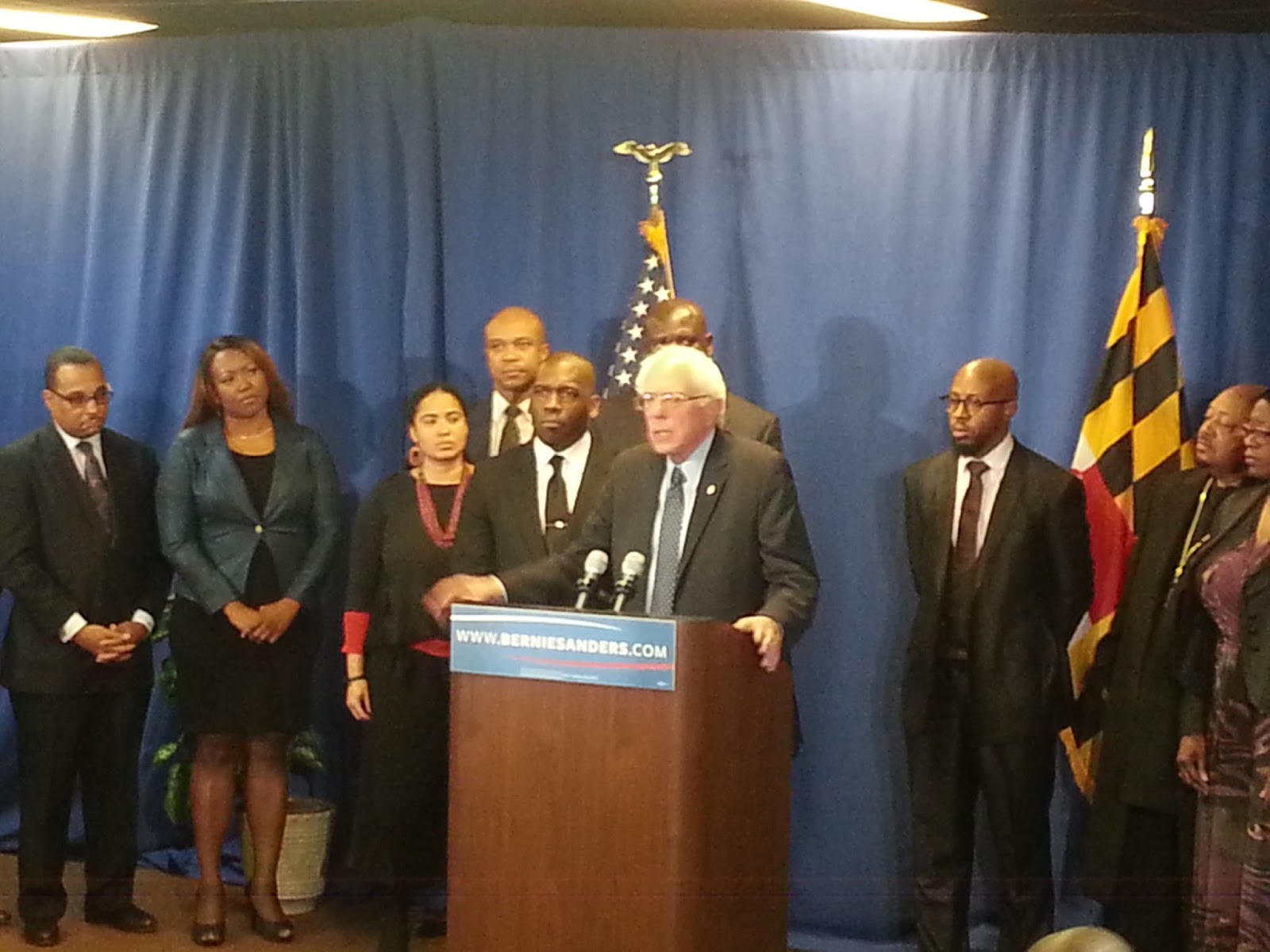
We saw this with the embrace of Vermont Sen. Bernie Sanders in his run for President. Sen. Sanders had little connection with the Civil Rights Movement but, was able to plug into this group by embracing young people and their issues via these new technologies. Some of his supporters were disappointed at Obama and this was their way to vent.

Another schism includes embracing the LGBTQ community and rallying college students over student debt. There was less emphasis on race and more on community.

The Future

“Don’t trust anyone over 30,” was a simple moniker in the 1960’s. Blacks and Whites embraced the simple notion this age group had much to lose and would be cautious about confrontation. I had similar view but, as I have grown older I find myself drawn to those who are much younger than me and try to give them the benefit of the doubt.

Simply, “talk is cheap.” Movements are messy. This means sometimes there will progress and at other times there will regression. “It’s not the critic that counts,” said President Theodore Roosevelt. I am firmer believer in grassroots and organic movements. These movements will and should include artisans, entrepreneurs, and “hell-raisers.”

Everyone seems to be out to capture audiences, rather than people. Combine this with the “me” generation who is quick to re-tweet something they saw or heard. Its clear social movements of the future need to learn some of the lessons from the past. If your hero is someone who has a “beef” with someone (Rappers) then maybe our priorities are whacked. Black millionaires “bitchin” has nothing to do with your daily life. We are more connected than ever. This means we must be more discerning than ever.

Black Politics has always been about people and organization. If you “ain’t about this” get out the way. With young people dying, a political class which has no pulse, and a new administration prepared to send an America back to a time where people were invisible, there is a need more than ever to “get real.”

Black Politics evolution also should be universal. What I mean, is desperate parts of the US need to find common goals from every minority community and even white folk who “get it.” Philanthropic groups are fine, but know this, telling people who are hurting what they need is tantamount to a patriarchy. We've been through this. Lastly, be open and not closed minded to problems that exist. Do not write off ideas, social organizing, or groups whom seem antithetical to what can be achieved. The need to have a politician serve as the “end all to be all,” maybe coming to an end. Great ideas have “no permanent friends nor permanent enemies’ just permanent interest;” wherever they come from. “The cream will always rise to the top.”


###


Labels: , , , , , ,

Monday, November 24, 2014

Redemptive Politics


(Baltimore/Washington) – You know you have become a political icon when you change the language of politics and usher in new ways of practicing the art. Marion Barry the former of Mayor of Washington, DC died on November 23, 2014. The 78 year old politician was already a legend and his passing cements his credentials.


I will suggest if there were a Mount Rushmore for Black Politics it would include Adam Clayton Powell, Shirley Chisholm, Maynard Jackson, Thom Bradley, Doug Wilder, and Marion Barry. I know people will likely disagree (but it’s my list – make up your own).

I had the pleasure of covering Mayor Barry during several of his tumultuous periods – the lead up and the conclusion of his FBI sting on crack cocaine and his return to being Mayor. These were interesting times. For the uninitiated the FBI sting will consume a lot of ink and air time. His famous line “that bitch set me up…” will often be repeated; however, there is more to his story than this short period.

There are several interesting aspects to his political life. A number of these events shaped his career and thinking. The item which dominated his later life is a quote which he enjoyed and embraced “Mayor for Life.” Walking with him anywhere in DC and for that matter anywhere was like being with a “rock star.”

I found this part out while covering the Republican National Convention in San Diego 1988. I got word the Mayor was in Southern California and planned to host a reception at the RNC. We went to this house in the hills of San Diego and in walked the mayor. The GOP big wigs were there including a young Maryland lawyer named Michael Steel. Steel would introduce Barry to conservative insiders who were more than happy to have their picture taken with the Mayor. It was surreal to say the least.

Historical you can go the Washington Post to get the full Bio. I want to point to several salient entrees in this resume. Born on March 6, 1936 into a Mississippi share cropper family, his mother would leave his father and move to Memphis. This simple gesture left an indelible impact on a young man as he struck out in the world. First he attends LeMoyne College in Memphis, majoring in Chemistry. He would earn a Master’s Degree at Fisk University in Nashville, TN (1960). It’s during this time he would also join Alpha Phi Alpha Fraternity, Inc. He was headed toward getting his Doctorate except for the tenor of the times. Civil Rights protest was consuming the South including Nashville. There he would join forces with John Lewis and be instrumental in the Student Non-violent Coordinating Committee (SNCC –Snick). The push and pull between traditional (older) and these young upstarts were hard to contain. It would lead the Barry to Washington, DC in 1965 working for SNCC.

Many cities on the Eastern Seaboard and the Midwest are always suspicious of Southern transplants. Part of it comes from the dialect, mannerism, and cultural disconnect. The irony is most of these folks are from the Deep South. His association with those in the District who had no voice was emblematic of the change in politics. DC had its entrenched political hierarchy but, he sought to usurp their power. He founds an organization called Pride Inc. Its stated goal, help unemployed Black men find jobs. It allows him to have a unique voice in an entrenched city. In 1971, he is elected to the School Board. Three years later he is elected to the DC City Council (1974).

Opportunity and Positioning

On March 10, 1977 Barry arrived at the Wilson Building. A guard suggested there was a commotion upstairs. According to the Washington Post, the 41 year old Councilman blew off the suggestion from the guard and headed to the fifth floor. Unknown to him a group of “Black Muslims” (we know they were a part of the Hanafi Muslim sect) had stormed the building with weapons. When the elevator doors open there were several shots. The councilman is hit. He is taken to a conference room. The siege continues and Barry is lowered out of a window and taken to a hospital. Doctors tell him a small caliper bullet struck near his heart but not penetrating his heart.

For most this would be life altering event; however it provides the perfect platform to launch a Mayoral run. In 1978, Marion Barry becomes the second Mayor of Washington, DC beating the handpicked establishment candidate Walter Washington. It shocks the establishment.

Mayor Barry confounds the political class, and the Black Aristocratic class in Washington. A lot of folks see him as dangerous. How will he wield this new power? Washington is still a southern city with all its quirks.

 The four termed Mayor of the District of Columbia was cunning, a tireless advocate, and will be judge not because of his many faults but rather his ability to connect beyond the superficial. I want lay these intriguing facts about the man who became known as “Mayor for Life.”

Intergenerational Politics

In those early years the federal government was truly a partner with city. The Mayor took advantage of the generosity. He proudly proclaimed any DC youth who wanted a job, could get one. I can’t tell you number of people who now have the wherewithal to make things happen tell me, “Marion Barry gave me my first job.” These people have never forgotten. For those who live in the District they became core constituents. I can only recall one other politician doing this, Mayor Richard Daley of Chicago. Mayor Daley called them patronage jobs and gave them to Block/Precinct Captains to make sure they voted on election. The quid pro quo from Mayor Barry was different.  It was inferred he looked out for you, when no one else did.  Other political heavy weights across the country have tried to mimic this and failed.

Wealth Creation

Atlanta Mayor Maynard Jackson knew the power of Black Politics and decided to wield it in a unique way. He took a sleepy south town and over night “flips its script.” Mayor Jackson got the council to pass a measure called “minority set-a-side.” Twenty percent of all construction contracts would go to minorities. My good friend, Doni Gloverof BmoreNews.com, who was a student at Morehouse College says, “It wasn’t just Georgians who came to Atlanta but, Black folk from all over the country came to provide services to Atlanta.” They came for major projects like MARTA (the subway system) and the Atlanta Hartsfield Airport.

The Mayor saw what was going on in Atlanta and saw possibilities in the Nation’s Capital. He started with the development community. His first project was the Reeves Office Building at 14 and U. The area had been neglected from the riots and torn up by the construction of the Metro. Today it is a social scene of night clubs, restaurants and posh living spaces in DC.

It was just the beginning; the Mayor lured the NBA Bullets (now the Wizards) franchise from the Maryland suburbs to China Town. Numerous other projects were lured. The infamous song Chocolate City by Parliament was being changed. Those who had benefitted from those early investments saw them grow somehow pushing out low income residents; and pushing middle class residents into wealthier class status.

Redemption

“We all have our demons, few us ever own up to them.” This often repeated phase applies to Mayor Barry. It was not uncommon for “his honor” to show up at events, night clubs and other places where he might have a few too many drinks. When reporters began to note his late night carousing the Mayor responded “you know I’m a night owl.” Along with these nighttime romps, rumors began to fly he was using drugs.

It doesn’t help when your city is facing bankruptcy, and a former deputy Mayor is indicted and found guilty. A number of other associates are caught in stings. Was he the target of an investigation? We found out on January 18, 1990. In an FBI sting Barry is shown smoking crack cocaine at the Vista Hotel. Barry suggests he was “set-up.” The court of public opinion throws Barry under a bus and suggests his political career is over.


The general public is dismayed over the support he garners in the Black Community. It’s during this period I find myself covering the Mayor for WEAA-FM in Baltimore. I join forces with WHUR-FM in Washington. WHUR and WHMM-TV are the only media outlets who the Mayor will talk with. As I look back on this time, this was heady stuff. How do run a city while under indictment? Going to press briefings with Barry was brutal. Although I was an outsider there was no let up. The charming Barry became combative Barry. Much of his vitriol was for my friend Yolanda Woodlee. Woodlee covered Barry for the Washington Post. He would light into her about anything she wrote, but she never backed down. He would refer to her as “dirt digger.” Sources would call Woodlee whenever they saw the Mayor, especially during his clubbing and later night meanders.


The Barry trial dragged on for weeks with the public thinking he was done in politics. The verdict came on August 10, 1990. He was found guilty of one count, possession of cocaine. Twelve others counts were thrown out. Supporters of Barry circled the federal courthouse and rejoiced, beeping their car horns.  DC became the punch line and the butt of so many jokes. People outside of DC consistently said, “I can’t believe Marion Barry is still Mayor?” Barry received six months in jail and lost his first election following the conviction.


When he finished his stint in Federal prison in 1992 he returns home and decides to run for his old council seat in Ward 8 (one the poorest jurisdictions in the city). His campaign slogan "He may not be perfect, but he's perfect for D.C." He wins.

Barry and his supporters calculated, "who better to represent you than me." His pitch was simple I am someone who has had a drug problem, been through the legal system and survived. He surrounds himself with religious leaders who talk about Redemption. Drugs and murders are rampant in the city. There is no superman to solve these intractable problems. Redemption politics is in full affect and the next mountain to cross is a return to the highest office.

Coalitions and Mobilization


In current politics, we talk about making sure you get your base gets to the polls and also broadening your base. Mayor Barry was active this arena long before it became the nomenclature of politics. You’ve heard how he was able to capture generational African-Americans but he to broaden his appeal to other minorities and those who were on the outside who wanted a place at the political table.  This included foreign nationals i.e. Asians, Latino’s and the Ethiopian/Eritrean communities. Asians saw his desire to recreate China Town as an affirmation they were on the mayor’s radar screen. Latino’s weren’t much of a factor in the early Barry administrations.  Overtime the number of Latino’s from El Salvador, Honduras, Costa Rica, Panama and South America began to populate the Columbia Road corridor. They could not be ignored.

The Ethiopian/Eritrean communities however became more important to Barry than any other group. By way of background if you park at any garage in downtown Washington it’s likely owned and operated by Eritreans. If you get in a cab in the District, the driver is likely from Addis Ababa (the capital of Ethiopia). Both groups look to carry favor with the Barry administration. Their adviser provided much need capital to Barry Campaign in later years. Favorable legislation flowed. In several elections challengers tried to unseat the Mayor. Barry’s Election Day ground game was always superior to his opponents. The Barry Campaign called in their favor from Ethiopian/Eritrean communities.  Volunteers armed with voter list will call these people on Election Day and transport people to the polls for free. I have watched this personally and it is a game changer. A majority of media didn’t see this coming and when they discover the ground game it was revelation.

Lastly, Barry is the first modern day politician to openly advocate for the Gay community. He included gay members in his cabinet. He walks in Washington’s Gay Pride Parade. The thing that endears him to this group is his early acknowledgement of the AIDS epidemic. He championed the AIDS quilt in the eighties which drew attention to those who had died from the disease. Few politicians dared to acknowledge this community and let alone embrace them. Barry was there before the world.

Post Script

Generations of Washingtonians will talk about what Marion Barry did for the city, the underserved communities, the empowerment of the African-American business community, and the expansion of voter base.  Political scientist and students will pour over his legacy and point to his accomplishments. In Black Politics, he ends an era where those who were one step from slavery (share cropping) could rise above their circumstances, fail, and find redemption. This is an American Story.

Labels: , , , , , , , , , , ,