Tuesday, December 29, 2020

Top Ten Stories Black News Stories of 2020

(Baltimore, MD) – What a year! As you look back a number of events impacted all us, including the Covid-19 Pandemic, the deaths of African-Americans at the hands of police and its protest aftermath, and the awakening of a sleeping electorate. Those are the easy ones. There were a lot more nuanced stories within the Black community in the US and across the globe. I got to write a lot about it this year,  and some you will see in 2021.

How I do what I do (report) has changed. Yes, I’m doing everything from Zoom to StreamYard.

As always, this is my list. You don’t have to agree. In fact, you can make up your own. I’m not confined by politics. I take in popular culture, history, Africa, literature, technology and so much more. FYI, it isn’t always serious so if you find yourself laughing…it’s by design. Please be advised it’s tough to keep it to ten items.

10. Africa and its Strongmen – When colonial rule ended on the Africa continent several types of leaders emerged. Those who embraced democratic principles weren’t always accepted and “the spear and the gun” seemed logical. Failure to pay attention will leave your global perspective lacking. I am going to point to several areas – Ethiopia and Tigray region.  I praised Nobel Peace Prize-winning Prime Minister Abiy Ahmed when he settled a long running border war with Eritrea. This new uprising is occurring in the Tigray. There have been simmering tensions that has resulted in a fighting war. Tigray People’s Liberation Front (TPLF) lost favor with the ruling majority and wanted autonomy. Things went south when the TPLF attacked the Ethiopian Army.

Things are going from bad to worse in these countries: Nigeria, Zimbabwe, Mali, Morocco and many more.

9. So What Am I Supposed To Do? I’m a Performer. – In April, I was scheduled to see Maxwell perform with the Baltimore Symphony Orchestra. Yes, I was excited, bought a new tuxedo jacket, and was going to splurge on a limo. Canceled. For any kind of performer, this was not good year. Unlike a nine to five, any kind of a performer was caught in a bind. My good friend, Maysa, allowed me to talk to her about her unfortunate circumstances. "I had twelve to thirteen shows canceled at one time, some postponed and others outright canceled. It's difficult." It wasn’t just national acts which lost income. There were venues, comedians, dancers, and those who use "Live" audiences. Many, of course, turned to Zoom and other platforms to keep the music/dancing/reading going, and yes, get paid considerably less than their normal fees. Let me also include in this list my favorite Black restaurants who continue to scramble.


8. McKenzie Scott and HBCUs. Scott was married to Jeff Bezo’s (worth roughly $182 billion as of September 2020) and helped him create Amazon. The two divorced. So she could have easily stood on the sidelines, instead she gave $4.2 billion to 384 organizations, no strings attached. What surprised many was the major donations she gave to several HBCUs around the country. 

It caught my attention when four of these schools (University of Maryland Eastern Shore, Bowie State University, Morgan State University, and Howard University) were recipients of her largeness.

7. “You Know I’m a Rapper” – I know what I know and I don’t try and do things I don’t. For all the advisers to those who “spit knowledge,” let the people you’re represent in on some simple ideas. A rhyme scheme is not a PhD. A “dope track” does not grant you a  masters degree. Your work with varied artist is not a substitute for being conferred a degree from an accredited university. Jumping into politics is not a license to condense years of  political science into what looks good on an album cover/or a slogan that can be repeated at a concert. (Here’s hoping – your music career has more life).

Kayne West “showed-out” with his embrace of Donald Trump’s MAGA. What made it obscene was he launched a presidential campaign/record promotion in year where elections were consequential. His benefactors for underwriting the entire endeavor, were known Republican operatives. The idea that was hatched, use Wests celebrity to syphon young Black voters away from Vice President Joe Biden.

Honorable mention included in this category includes “Ice Cube.” The LA based Rapper put forward a “Platinum Plan“ (branding seems more important) as a part of a so-called  Contract for Black America” he also shared with the Trump Organization. I don’t remember voting for Ice Cube for anything.

In a moment reminiscent of Elvis, Lil Wayne endorses Trump in a photo. FYI, Wayne was arrested on his private jet with drugs and weapons. He has pleaded guilty. Now would be a good time to see if there is a pardon coming.

The one thing I do know is Cardi B and Megan Thee Stallion killed it on WAP, which is one of the few things that spoke the truth.

6.  The Stories We Tell – The pandemic has me watching a number of movies and series online.  I am excited to see different story lines with nontraditional roles for African-Americans in front of and behind the scenes. Things which caught my attention include and are not limited to the following: Woke (series), The Boys (series), and The Mandalorin (series). The small screen has also allowed me to see things I found enjoyable: High Note – Featuring Traci Ellis Ross as an aging singer. She likely took notes from her mother, Diana Ross. The Weekend -  featuring Sasheer Zamata is a surprising find.


A newcomer to my list for this year is Sylvie’s Love – featuring Tessa Thompson and Nnamdi Asomugha. A Black love story with jazz as a backdrop.

If you’re looking for something to read, The Dead are Arising - Tamara Payne. Ms. Payne is the daughter of my late friend and founder of NABJ, Les Payne. She completed her father’s groundbreaking work.

Lastly, we lost one of the great actors of our time, Chadwick Boseman. His work lives on in several posthumous releases, Da 5 Bloods and Ma Rainey’s Black Bottom. RIP.

5. The Reckoning – As an African-American man there has always been a sense your knowledge could save you from indignities, fear, and harm. This year proved deadly on some accounts. The cellphone has become the truth serum. Some members of the majority community have unfortunately been emboldened and found it easy to suggest  “You’re threatening me.”  Another refrain includes, “Your actions to defend yourself from harm are malicious.”

I want to point to Amy Cooper. Ms. Cooper took it upon herself to call police on a 57-year-old Black birdwatcher, named Christian Cooper (they aren’t related). The female Cooper was walking her dog unleashed. She was asked by the birdwatcher to conform to the rules of Central Park. She refused. The birdwatcher pulled out his phone and recorded her actions including her yelling at a dispatcher “I’m being threatened by an African-American man. Please send a cop immediately.”

Christian Cooper

This simple message brought police to the park where the male Cooper was surrounded by police with guns drawn. The police ascertained he wasn’t a threat and she was in violation of park rules. A viral video of the incident pointed to why white privilege and not so subtle racism is a problem. Ms. Cooper who lives on the Upper Westside of Manhattan would end up losing her job and shamed in a way that became a trend. Oh yes, she apologized.

She is not alone. Sometimes, these encounters prove deadly (I’ll get to this further along). I’m also aware this discounting of race from older white men/women especially in media has left them wondering, “What did I do wrong?”

4. “This Ain’t Supposed to Be Funny” – It’s been difficult in these times to find something to laugh about. Black comedians have used pain for jokes (Richard Pryor).  Here are some of the people and things that brought comic relief.

·       Robin Thede and A Black Lady Sketch Show. Ms. Thede’s brand of comedy is intelligent, sassy, and will have you cracking up. The skits on a Courtroom Kiki , Soul Food Purgatory ,  and On My Own are brilliant.

·       ·       Roy Wood, Jr.  – The Daily Show has launched the careers of so many successful comedians. The Daily Social Distancing Show is bringing it in ways not seen before. Roy Wood, Jr’s wit is unmistakable. 

·       ·       Dulce Sloan channels every Black woman who goes to a department store and is pissed they don’t have a dress/pants/suit in her size. Lane Bryant is a way of life.

·      ·        Dave Chappelle – There is something about Chappelle that speaks to who we are at this moment. I didn’t get the tittle of his latest special 8:46. I won’t give away its meaning. It was taped “Live” in a cornfield near his home, which is just outside of Cincinnati (FYI, I lived in Cincinnati). It will make you uncomfortable, as it should. 

3. Black Lives Matter Movement (BLM) -  If you’re reading this you didn’t need a movement to let you know it was a global movement.  From big cities to small hamlets in the United States, BLM, was crystalized in the deaths of Ahmaud Arbery, Breonna Taylor, George Floyd and others. It also struck a nerve with people (white folk) who said the police had gone too far. People took to the streets in London, Sydney, Tokyo, Johannesburg,  and many other  places because they too had seen an unequal administration of justice. Some would wish it would go away, but we are here to stay. In Baltimore, it’s expressed in a simple message. “Can you hear me, Yo!” “Say her name!” “I can’t breathe!”


2. Elections are Vital – As a Political Reporter, I know polls are just snapshots of time in an election season. This year records were shattered for voting. According to the Washington Post, nearly 66.7 % of those eligible to vote, participated in the US Presidential election. Those percentages equate to 159,633,396 to be exact (source: Council on Foreign Relations).  Joe Biden received 81,283,098 votes, or 51.3 percent of the vote (first time any candidate has broken the 80 million threshold). Donald Trump received 74,222,957 votes, or 46.8 percent of the vote. 

As you drill down on the numbers, here’s what made the difference. The selection of Senator Kamala Harris as the Vice-Presidential running mate was a motivating factor for Black Women.


It showed itself during the Primary in South Carolina, where Black Women pushed Biden over the finish line. This trend continued to manifest during the general election in the battleground states of Michigan, Wisconsin, Pennsylvania, and Georgia. While the Black vote only makes up 11% of the population, according to AP VoteCast 9 out of 10 Black voters cast their lot with Biden.

Biden acknowledged on election night, “The African American community stood up again for me.” What makes this more than remarkable is it occurred during the middle of a pandemic.


1. COVID-19 – 300,000 people and counting. The number itself is sobering. Inside those number are African-Americans who didn’t have to die. So many have underlying conditions of high blood pressure, heart disease, and too many other conditions to list. I have been watching the numbers of Blacks in Maryland whose lives were cut short. I’ve also seen too many Zoom funerals/going home ceremonies.

There is a unique continuum in the African-American community that comes with the death of a loved one. It starts with a call to a pastor. Normally, he/she would show up at your home to provide condolences. Then there would be arrangements such as contacting a funeral home, setting up a wake, a funeral service, a repast, and a grave side interment. The personal touch has been lost in this environment and don’t get me started on who is allowed to come and participate.

I am reminded of my Grandmother’s funeral and attending as a little boy. As I arrived with my mother, I asked, “Who are all these people?” My mother responded, “These are the people who loved her.” I imagine all the young people who won’t get a chance to ask this question at the funeral of a loved one, especially behind a mask.

If there is hope, it is a vaccine. It’s being administered to frontline workers first. Many of the people who treat your loved ones infected with Covid-19 are people of color. I know the historical apprehension in the Black community about taking shots and how the medical community has taken advantage of us.  Let us not be blinded by what has happened, but remain hopeful.


Person of the Year

Dr. Kizzmekia Corbett

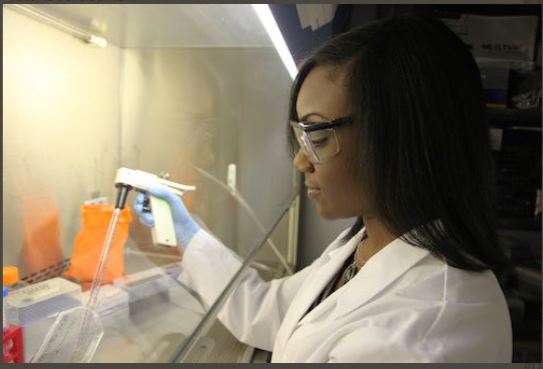
Let’s call it what it is “Black Girl Magic.” Dr. Kizzmekia Corbett was a lead scientist behind one of the vaccines’ developed at NIH. According to Dr. Anthony Fauci, (he calls her Kizzy) she was the lead researcher who developed the Moderna vaccine. The 34-year-old, earned her undergraduate degreee at the University of Maryland Baltimore County (2008). Then received her Ph.D. in Microbiology and Immunology in 2014 at University of North Carolina at Chapel Hill.

Dr. Corbett appeared on CNN's Dr. Sanjay Gupta on the podcast "Coronavirus: Fact vs. Fiction."

According to her, "Trust, especially when it has been stripped from people, has to be rebuilt in a brick-by-brick fashion," she said.

"And so, what I say to people firstly is that I empathize, and then secondly is that I'm going to do my part in laying those bricks. And I think that if everyone on our side, as physicians and scientists, went about it that way, then the trust would start to be rebuilt."

Dr. Kizzmekia Corbett


Labels: , , , , , , , , , , , ,

Monday, July 24, 2017

Can the NAACP Get it Together?


(Baltimore) – There is an uneasiness as membership of the National Association for the Advancement of Colored People convene in Baltimore for their 108th annual gathering. The storm clouds are both internal and external. 

As they arrive and do the ground work, questions abound about who will lead the oldest civil rights organization. There is no Chief Executive Officer. Cornell W. Brooks’ contract was not renewed in May. Leading the group is the Board Chair, Leon Russell and Vice Chair, Derrick  Johnson. Delegates began arriving on Saturday (7/22/17). The Executive Board decided late in the afternoon to name Johnson as the Interim CEO. It will squash the numerous questions from chapter leaders. According to Chairman Russell, "we’re in a period of transition." An understatement.

Relevancy

It’s been difficult to stay relevant as groups like Black Lives Matter (BLM) were driving the Civil Rights narrative. The organization warmed to ideas from BLM. It included issues related to the killing of unarmed Black men and women, and the failure of juries to convict police officers. It's no secret the oldest Civil Rights organization wasn’t necessarily thrilled with BLM tactics. 

The NAACP faced criticism from groups like the Black Panthers, SNCC and the Nation of Islam in the 60's. It's almost like de'ja'vu. What concerned the oldest Civil Rights organization was BLM's ability to mobilized young people. Social media is driving an underserved community into the streets. The confrontation with police is a sore spot for the leadership of the NAACP. Russell cautioned "we can protest in the street (create disturbances), but it justifies more police aggression." Listening to all this was A.J. Ali, a filmmaker who has produced a documentary called "Walking While Black." "There is no program in place to foster pro-activity, it's only reactive."

Another sore spot for the civil rights organization are millennials inability to see a how there vote brings about political change. This group was excited and mobilized to elect the first Black
President, Barrack Obama. However, they were lukewarm to Hillary Clinton.
Some saw Vermont Senator Bernie Saunders more palatable as a Democratic Presidential standard bearer. Sen. Saunders tapped into their frustration. Some of his supporters in the Black community (younger) decided to sit out the presidential election. "Elections quite frankly matter," according to NAACP Board Chairman Russell, "By not voting in every election...they are tacitly allowing the kind of treatment they receive."

 The Promise

A day before the arrival of the delegates, the hallways in the Baltimore Convention Centers are filled with bright eyed faces waiting their turn to compete for this year's Academic, Cultural, Technological, Scientific Olympics (ACT-SO).  Some are dressed in gowns and tuxes to perform in singing and musical competition. Young women and men practice their routines, re-read their lines, and mental go over what got them to Baltimore. This is the promise of the NAACP. Provide a platform to showcase not just athletic ability but intellectual capacity to reshape their world. They are committed to the ideals of the NAACP. It's clear no one has told these young people how to shape an organization. Especially with vicious attacks from outside forces.

On college campuses the local chapters are a nurturing ground for political dialogue and engagement. At HBCU's they know the "Black Cause," and use their participation to create "street creed" for a world where they won't be in the majority. At majority "white" colleges and universities they are singled out when members draw attention to injustice from administrators and faculty (University of Missouri), and insensitivity by their fellow students (American University). 

This is bottled up energy looking for direction. It's clear, their promise has been muted by that age old adage, "wait your turn." It's finally about to change in a meaningful way.

One of the programs the organization rolled out in Baltimore was its Next Generation Program (NexGen). The NexGen program is a 12 month leadership development initiative targeting 21 -35 year olds who've participated in youth councils, college chapters and young adult councils. Those participating in the program will get training in legislative action, unit administration, and advocacy. 

Akousa Ali, the President of the Washington, DC Chapter of the NAACP, is heading up the national initiative. She estimates there may be as many as 300,000 individuals who could be eligible. The organization hasn't always groomed those who could take over leadership. Ali lamented that some chapters have embraced this idea but others have not. When asked why? "It's about opportunity." The 34 year old who leads the nations capital branch talked about putting young people on various committees. "Graduates of the training will go on to participate in the NAACP’s Leadership 500 (L500) program."

Who You Gonna Call?

Large urban areas have vast networks of resources which aid in bring attention to the many causes supported by the NAACP.  But in small towns the work is harder. Corporate support can add to your resources, but what do you do when it isn't available. Do you pack up shop and use that old analogy, "we'll get them next time." Some issues don't have time wait according to its leaders. Board Chair Russell and the Interim CEO Johnson made a point to talk about the U. S Congress' impending vote to dismantle the Affordable Health Care Law (commonly referred to as ObamaCare).

"Healthcare is a civil rights issue," according to Interim CEO Johnson. "We are at a juncture where people are trying to redefine the role of government. If that is done, African-Americans and working class people will be left out."  On an issue that will effect 1/6 of the U.S. economy you would think those shaping legislation would want to hear from the largest civil rights organization. Neither the Republicans nor President Donald Trump are interested. Johnson talked about how the organization has mobilized its members and communities to send emails to congress. Is anyone listening? Despite being sent an invite to address the group, President Trump has decline just as he did when he was a candidate.

###


Labels: , , , , , , , ,

Tuesday, November 15, 2016

The State of Black Politics


(Philadelphia, PA)
I went down to the crossroads,
Tried to flag a ride.
Nobody seemed to know me,
Everybody passed me by.

Eric Clapton

There is an ebb and flow of Black Politics in America which is invariably at a crossroads. Will it hold on to its past or will it be nuanced enough to engage millennials who have a disdain for the prior generations' efforts. I have heard this generation call the current crop of Black politicians “comfortable” and “soft” to explain their association with traditional Civil Rights organizations.

The “old guard” sees no structure, no purpose, and the inability to compromise from those who will take Black Politics to the next level to achieve results.  I went searching for answers during this political season.

There will be no Obama on the ballot for the foreseeable future. Will it mark the end of an era of Black Politics in America as we know it? The political conventions have ended and it’s time to assess. There are pockets of promise, new energy from the Black Lives Matter Movement, and a political class which has honed its skills based on what has worked in the past. I’m not in the business of predicting the future, so I’ve sought out experts and those who’ve been there to take the pulse of Black Politics.

From the Streets to Ballot

Before Kwiesi Mfume was a Congressman and head of the NAACP, Mfume was just another Brother on the street hustling. In the early days of the Civil Rights Movement, Mfume noted social change was pulled in different directions. He pointed to “cross purposes” associated with different groups. They included movements like the Black Panthers, the Nation of Islam, the Urban League, the SCLC, and the NAACP. “There were five different directions, but they crisscrossed and spoke. They didn’t always agree but, they spoke (to each other)…no effort was estranged. (We believed) If you had better idea on where you were moving and where other folks would be moving in terms of lifting the community,” we listened according to Mfume.

You can see this play out in the iconic photograph of Dr. Martin Luther King Jr. and Malcolm X backstage at the Audubon Ballroom. Prior to the photograph the pair spoke at length in private. No one knows what the conversation was about but, it likely centered on tactics to bring about change.

A sullen Mfume was saddened a similar conversation is not taking place informally or formally outside the glare of television cameras or in the world of social media. “Without interaction between the different movements there’s confusion,” the former Civil Rights leader opined. “You’ve got to find a way to have a common conduit where you share information, off the record.”

Marc Morial the head of the Urban League sees something that established groups have failed at “we need the next generation of people to offer themselves for public office. Where we lost ground is with the enthusiasm. We need to get the turnout we need particularly, amongst young people.”

Morial became the Mayor of New Orleans while in his 30’s. He was often mention as a potential Vice Presidential pick. He believes their needs to be an evolution. “Black Lives Matter has given young people a voice in the issues of the times. What I do hope they will do is embrace the idea that part of activism must include voting.”

Nuanced

Prof. Keith Boykin of Columbia University teaches a course on African-American Politics in the Era of Obama. “We’re in a place of transition.”

Without a clear inheritor of the “Obama Legacy” there are number of suitors including California Democratic Senator Kamalia Harris, New Jersey Senator Corey Booker and Washington, DC Mayor Muriel Bowser.  Mayor Bowser has embraced the idea of a broad tent with few of the trappings which enabled one of her predecessors, the late Mayor Marion Barry to become Mayor. He became labeled “Mayor for Life.” It was Barry who embraced the notion that Washington, DC was “Chocolate City.”

It’s less of a focus for the current mayor who’s seen the city become more “Mocha.” “We’re focused on progressive issues that will spread the prosperity to all Washingtonians,” according to Mayor Bowser.  Like Obama the new face of Black Politics is race conscious only when it matters and absent the tough talk of “payback” for past transgressions.


Prof. Boykin picks up on this idea of less racial identity. The political observer notes that African-Americans  have known for a long time the prize was the Presidency. That box has been checked with the election of Barack Obama.  “Just electing a President isn’t enough anymore, not that it ever was…nor is it enough to assume a political figure in the Civil Rights community will be able to move the larger African-American community because the community is becoming increasingly diverse.” The political professor says the “messiah complex” needs to change.  “We have people all across the country with different backgrounds.” Despite these differences he sees promise on the horizon. The days of pointing to a single person as the face of Black Politics is in the review mirror. Boykin points to a new “third wave, that’s happening now…of people who aren’t going through traditional politics.” 

Tame or Encourage

Dayvon Love is a millennial. Love is a founder of a Baltimore based grassroots organization called Leaders of a Beautiful Struggle. Before Baltimore’s Freddie Gray’s death, they were working with youth in marginal communities in the city. 

“It wasn’t a single moment” which sparked his activism. He remembers how he and his peers were affected by Jena Six in 2007 (Six Black High School students in Jena, Louisiana were arrested and charged with a assaulting a white student in December of 2006). There were a lot of question about equal justice after several white students were suspended after being in fights but the Black students were arrested. “There were legitimate conversations” occurring especially in during Senator Barack Obama first run for President.

Love and several of his colleagues are intrigued by the possibility of working with established politicians hoping to learn the ropes. He found skepticism, “younger Black folks lump older politicians into one group, but there are many strata.”  

He points to how the older folks have different opinions of Black Lives Matter. “The old guard are fearful.” Instead of nurturing the next generation they seem more concern about “challenging the young on being successful.” Conversely, he knows a “lot of older folks, know where he’s coming from.” The community organizer points to a number of established politicians locked in on their “self-interest.”

Where this younger group has an advantage over the “old guard” is it’s embrace of new technology and their ability to find unlikely partners. Organizing via the internet is millennials tool of choice. From Facebook, YouTube, Instagram, Twitter, Snapchat, and Periscope the early adoption of these new technologies allows this group the ability to link with like-minded individuals who aren’t Black and may be outside the traditional Civil Rights Movement.

We saw this with the embrace of Vermont Sen. Bernie Sanders in his run for President. Sen. Sanders had little connection with the Civil Rights Movement but, was able to plug into this group by embracing young people and their issues via these new technologies. Some of his supporters were disappointed at Obama and this was their way to vent.

Another schism includes embracing the LGBTQ community and rallying college students over student debt. There was less emphasis on race and more on community.

The Future

“Don’t trust anyone over 30,” was a simple moniker in the 1960’s. Blacks and Whites embraced the simple notion this age group had much to lose and would be cautious about confrontation. I had similar view but, as I have grown older I find myself drawn to those who are much younger than me and try to give them the benefit of the doubt.

Simply, “talk is cheap.” Movements are messy. This means sometimes there will progress and at other times there will regression. “It’s not the critic that counts,” said President Theodore Roosevelt. I am firmer believer in grassroots and organic movements. These movements will and should include artisans, entrepreneurs, and “hell-raisers.”

Everyone seems to be out to capture audiences, rather than people. Combine this with the “me” generation who is quick to re-tweet something they saw or heard. Its clear social movements of the future need to learn some of the lessons from the past. If your hero is someone who has a “beef” with someone (Rappers) then maybe our priorities are whacked. Black millionaires “bitchin” has nothing to do with your daily life. We are more connected than ever. This means we must be more discerning than ever.

Black Politics has always been about people and organization. If you “ain’t about this” get out the way. With young people dying, a political class which has no pulse, and a new administration prepared to send an America back to a time where people were invisible, there is a need more than ever to “get real.”

Black Politics evolution also should be universal. What I mean, is desperate parts of the US need to find common goals from every minority community and even white folk who “get it.” Philanthropic groups are fine, but know this, telling people who are hurting what they need is tantamount to a patriarchy. We've been through this. Lastly, be open and not closed minded to problems that exist. Do not write off ideas, social organizing, or groups whom seem antithetical to what can be achieved. The need to have a politician serve as the “end all to be all,” maybe coming to an end. Great ideas have “no permanent friends nor permanent enemies’ just permanent interest;” wherever they come from. “The cream will always rise to the top.”


###


Labels: , , , , , ,

Thursday, December 31, 2015

Top Black News Stories of 2015


(Baltimore, MD) As I look back on 2015 there were so many singular moments in Black America that affected me I could easily expand my annual list. Some items were hold overs from the previous years. I continue to be fortunate to be able to write and report for a number of organizations. My voice is just one of many. I’m not confined by where I live but, I am not immune from the things in my backyard which affected a broader world. As always, you don’t have to agree with me, in fact I welcome your comments and observations.

10. The book Native Son by Richard Wright shook me to my core. Its anger and its consciousness grabbed me and I awaited writers who could move me in the same way. This year it happened through a pair of books written by Baltimore writers.

Ta-Nehisi Coates in his book, Between the World and Me, he writes a letter to his son, chronicling his upbringing in Baltimore. The author details the death of his best friend, Prince Jones. He dies at the hands of police.

Trying to make sense of the carnage and symptoms which lead to protests on the street of Baltimore is D. (Dwight) Watkins. He talks of the transition from drug dealer to college professor in the Beastside: Living (and Dying) While Black in America.

I wrote about the pair in an article for Ebony.com originally called Voices of Rage.


9. What About Our Daughters? This was a call that drew attention to the disappearance of girls in Nigeria. To bring home the issue the hashtag "Bring Back Our Girls" created linked communities worldwide. This drew attention to Boko Haram, an Al Qaeda affiliate, who kidnapped the young girls and forced them into marriages and converted them to Islam. Nigeria wasn’t the only country to experience the emergence of warlords. The lawless areas of African countries (Chad, Sudan, Eritrea, Burundi, and Mali) are ripe for religious zealots who see young girls and children as pawns. Last year, there was a concerted effort to capture Ugandan Warlord Joseph Kony. His army of child killers has made him a pariah.

8. Implosion of Dr. Ben Carson – As a political reporter my phone rings with unique situations. So you can imagine how excited I was to attend a meeting with Dr. Ben Carson who announced he was running for President on the GOP ticket. The invite came a week after the Baltimore Uprising in the wake of Freddie Gray’s death. What made the invite peculiar was its location, a church on the eastside of Baltimore miles away from the epicenter of violence. Most of those in attendance were religious leaders but, there were several young people. One of the young men in the audience asked Dr. Carson, what he could say to his friends, who might not believe in the ideas the Doctor was promoting? Dr. Carson’s answer, “Tell them to read a book.”
 
I’m guessing the young man left there bewildered as I was. His purity test on religious issues (because of his 7th Day Adventist background) leaves little room for divergent points of view.

Being President of United States doesn’t allow you put things neatly in a box. It was clear, he wasn’t ready for the big stage. His poll numbers have him going the way of Herman Cain and Michelle Bachman who saw their popularity sore then drop precipitously following questions on policy. Lastly, on the Democratic side, no one even flirted with the idea of replacing the first Black president?

7. Black People on Television – From television shows like Scandal, How To Get Away With Murder, Empire, and Blackish the roles for African American television actors and producers has layers. We still have a long way to go but, the landscape has possibilities. Casting directors are challenging who can play a role.

Lieutenant Uhuru of Star Trek let us know Black people are in the future. Star Wars has let us in on another secret, a Black character can be a hero and yes, there are Latino actors who can fly space ships (Oscar Isaacs). Lastly, I’m a big fan Fresh Off the Boat. The female lead, Constance Wu, brings the heat as she tries to bridge an absent Asian world (near Orlando) and a Southern White world with her son who loves Hip-Hop.

6. Kendrick Lamar – He is profane. He is prolific. He is poignant. He is poetic. He is Tupac on steroids. This Compton, California Rapper’s latest release to “To Pimp a Butterfly” screams pay attention to me. He is thrown into bizarre mix of young rappers (Fetty Wap, Big Sean and Chance the Rapper) whose dance tracks have little to no purpose other than its beats and predictable rhyme schemes. Lamar is different.

Think of Marvin Gaye suggesting he wants to have a conversation with a deceased Tupac Shakur. That’s what happens on this latest release. You know you’re in a unique conversation when longtime Black columnist Barbara Reynolds says, “I don’t get it,” after listening to “Alright.” My younger friends who’ve I’ve asked about the Compton Rapper say, “he’s to Black…he’s preaching.”

Like Shakur he poses questions like, “When I get signed homie, I’m gonna buy a strap, straight from the CIA. Set it on my lap. Take a few M-16’s to the hood, and pass them all out in the hood, what’s good.” It sounds dangerous and couldn’t be more perfectly time for the emergence of Black Lives Matter.

“All my life I’ve had to fight.” Did I mention he’s up for several Grammies including “Record of the Year?” Lastly, you know you’ve made a significant move when you’re asked to headline with National Symphony Orchestra at the Kennedy Center.

Despite Passage of Time, Rage in Baltimore Has Potential to Reheat<br />5. Black Lives Matter – This group scares so many people it makes them vital even if you don’t want to admit it. They are disjointed but, have become a unique voice in a time of turbulence. They came of age following the death of Michael Brown. Black Lives Matter has become the go to group on the ground for protest (forget the NAACP).

There simple question to anyone who will listen is, “Do Black Lives Matter?” For white politicians it was difficult to answer, and many were flippant in answers, “All Lives Matter.” Police see many in this group as “public enemy number one.” These officers had their own answer, “Don’t Blue (Police) Lives Matter?” For Civil Rights groups they chimed in with, yes but a lot of qualifiers.

Their tool of choice is twitter and mobilization is the weapon. It’s difficult to pin them down on what they want. During a meeting with Presidential Candidate, Hillary Clinton, she called them out for not having a strategy. They have made their presence known on the campaign trail (GOP and Democratic rallies) but, what affect will have at the ballot box?

4. Hatin on Obama – There are many reasons for people dislike the president. The POTUS admitted in interview with NPR before the end of the year that some of it revolves around him being the first Black President. That’s easy to see when people continue to question (including the GOP frontrunner) if he was born in Kenya. Calling the POTUS a demon is easy. Some have suggested he has given everything to other constituencies but has failed to deliver to the Black people who put him in office. Without his name on the ballot all candidates are struggling to connect with his unique coalition.

3. Robert F. Smith – It’s a name that doesn’t come to mind when you think of wealth. Mr. Smith is the head of Vista Equity Partners which gives him a net worth of $2.5 Billion and by Forbes Magazine standards makes him the 268th richest man in America. Note he’s not a media mogul (Oprah), a music mogul (P-Diddy/Russell Simmons), nor can be found on Page Six of the New York Daily News. Like the late great Reginald Lewis he used his knowledge to invest in lesser known “Silicon Valley” start-ups. He has BS degree in Chemical Engineering from Cornell University and an MBA from Columbia.


2. Black Life Continues to Be Cheap (Especial for Young Black Males) – Their names (Trayvon Martin, Michael Brown, Freddie Gray, and Tamir Rice) are a part of lexicon of individuals struck down before they had a chance to experience life. Their mother’s mourn and people are outraged. The outrage isn’t limited to the Black community. It seems as though the theory for police is to shoot first because somehow these young people appear menacing. Ferguson, Baltimore, Cleveland, and Chicago are at the epicenter of these struggles. I am particular disturb about how the Cleveland Prosecutor suggested it was 12 year old, Tamir Rice, who caused his own death.

1. Baltimore Uprising – Of all the deaths of young men this last year Freddie Gray’s in the back of police van caused the most potent of backlashes, a riot. So why did it happen in Baltimore? I’m still trying to answer this question as I sit and watch the trial of six officers who were charged with his death. This much I much can tell you, it was Gray’s death that was a catalyst that shed light on years
of neglect of a community. The community wore their emotions on their sleeves during this process. I know, I was there. I felt their anger but, the destruction left a community with few opportunities reeling. There a people of good will trying to rebuild what some people destroyed. It’s a lesson that other major cities are heeding.

Person of the Year - Judge Barry Williams. I've known Judge Williams for years but, his handling of the case of six Baltimore Police Officers charged with Freddie Gray's death is nothing short of brilliant. First, he has fought back those who say the case could not get a fair trial in Baltimore City. He has deftly handled both sides in the case who have sometimes made outrageous request in motions. By separating each of trials he has asked that each stand on their own. As I sit in the courtroom, I'm reminded he demands the juror always respond loudly and enthusiastically to his "Good Morning." Lastly, if you're an attorney in these cases, he will chastise you for not asking questions (they must be relevant). For my media friends he's been lenient when it comes to covering the case: however, violate the rules and you're out (four have been tossed). I've not be one of them.   


Labels: , , , , , , , , , ,

Tuesday, October 13, 2015

Fear of Knowing

(Washington, DC) The call to come was too great for those of us who showed up 20 years, where else would you want to be –The Million Man March. We’re older now with more years of experience. We heeded Minister Louis Farrakhan’s call to go back to our neighborhoods, atone for past mistakes, and find purpose in our communities, churches, and neighborhoods. This was different, it wasn’t just a call to action but, rather a provocative statement; "Justice of Else."

Like the mood 20 years ago things are happening beyond the control of Black Men/Women. Some will suggest it began with the killing of Trayvon Martin and the release of the vigilante accused of his murder. It intensified with Michael Brown’s death in Ferguson, Missouri. Eric Garners cry for help “I Can’t Breathe” in New York at the hands of police. The death of Black people just seem to intensify with Freddy Gray’s death (and the subsequent Baltimore Uprising) and Sandra Bland's questionable death while in custody. We’re still awaiting the outcome of Tamir Rice case in Cleveland. I’m not conspiracy theorist, however the facts and the circumstances seem to bare out the need for the movement of “Black Lives Matter.”

“Little Brother make sure you make way for people who want to sit down,” said a man to a pair of young Brothers who rode the DC Metro on the way to the March. “The Minister, wants us to be respectful today.” The young men in their late teens seemed more preoccupied with their “gear” and tunes. The Cleveland man in dread-locks turned to his friend reminiscing about the March and its aftermath. “I had to leave DC, there weren’t jobs and the cost of living was cheaper in Cleveland. Hell, to live here now, you’d have to have a regular job and be a part of the criminal element. Here’s our stop.”

The mass of humanity heading from Union Station to the Mall seem to come in waves. There was no sign of potential problems the Capitol Police alluded to prior to the March. People came with purpose. Like the hundreds of Howard University students who took to the street to make known their discontent or the hundreds of members of Alpha Phi Alpha Fraternity who wore dark suits along with ties and bow ties. I saw men and women bring their children. Purposeful, members of the Nation of Islam (NOI) dressed in their traditional gear (bow ties for men/long skirts for women and head covers).

I noted a number of non-traditional attendees who seemed at home with this group. A Latino couple who were there to witness the event, white reporters who flowed through the crowd hoping to capture what was happening, and supporters of every ethnicity took up space on the Mall.

While this wasn’t a march for Men only the large contingent of women who showed up expressed concern they have for their sons and men in their lives. The death of young Black men on American streets  has become epidemic.
While death at the hands of police was a focus at this event, statistics show a number of those killings are being done by those in the same age group with no abatement. It is unfortunate, manifested in the women left in their wake. From the mothers who weep at their funerals to the women who bear their children grow up not knowing their fathers. These women were in attendance.

At 82, this likely be one of the last major addresses Minister Louis Farrakhan will make to gathering of this size (estimated crowd 850 – an under-count). As a disciple of Elijah Muhammad, he made good on his vision that Black people would follow a leader who would bring Islam to the west. The Minister is one of the few who has a link to Muhammad and Malcolm X. It gives him credibility,
continuity, and courage to face a disgruntled population looking for answers. His name evokes fear in many quarters and he uses it to his advantage. On the ground he gets points from rappers to gang bangers. His so call “street cred” is unquestioned.

“Hey, I didn’t hear a lot about the March this go round,” was often uttered in my presence as I told people I was heading to DC. Like much of the media landscape things have change from 20 years ago. There was not an abundance of cell phones; Black radio was on the cusp of coming into its own; BET had barely penetrated Urban America; the Internet as we know it today was in its infancy; and the term social network didn’t exist.

The “full court press” of then gave way to an underground network which produce the first march. It was Texted, Tweeted, Snapchatted, Periscoped, and Facebooked around the globe. If you read the “Final Call” or any Black news outlet you knew, if you were plugged into “Black Twitter” you knew, and if you listen to “Black Talk Radio” you knew. Certain “Chocolate Cities” were very much aware.

However, if you expected traditional networks i.e. ABC, CBS, NBC, CNN, MSNBC, FOX etc…you didn’t even know it was happening. Who missed the boat, Hip-Hop Radio (more concerned about Drake, Rhianna, Little Wayne, and Nicki Minaj),
BET/TV One (condensed the day into hour specials), and Black Comedy (it’s hard to be funny when this is serious business). The fact is this event was in DC gave it over to the one entity with the “cohunes” to bring it you live – CSPAN. Close to a million people showed up, that is power.

The array of speakers which lead up to keynote were by their presence was protest. I took note of my fraternity Brother DC Councilmen Vincent Orange. He spoke of District residents continued disfranchisement. “We have no vote in Congress…we don’t have the right to vote for President…sign our petition to give us that right,” implored Orange.

Native speakers reminded the crowd of the evils of the Europeans “who stole our land” plundered our wealth only to be corralled on reservations that one speaker described as “concentration camps.”
Sharing the stage with America’s indigenous people were Spanish speaking migrants who addressed the crowd in English and their native tongue. They implored the crowd to think of their share experiences and work together on common causes. One speaker noted that their combined strength would far out way what those who are trying to demonize there undocumented status and thwart them politically.

The arrival of the Minister on this stage is a testament to his staying power and his “beloved” stature. Age has a way of making you evolve. Time has also had an effect on the members of NOI. I’ve known various members, whom I call friends, and witness there transformation. They are global in their perspective, they are technologically savvy, and their enduring commitment of Black people and their plight is unwavering.  They are introspective as the movement which began with racial solidarity has evolved to embrace science, philosophy, technology, and business acumen. They will not be “pigeon holed” by critics.

There were nine demands outlined by the March organizers. They included justice for Blacks, Native Americans, Mexican-Latinos, Women, Poor, the Incarcerated, and Veterans. There was a demand for an end to police brutality. There was also quid pro request for land to pay for the years of non-payment (think reparations). These requests aren’t new. Historically, NOI has asked for similar things in the past. It is the “or else” portion that implies a threat that even he (Farrakhan) can’t predict nor control.

Minister Farrakhan acknowledged the Black Lives Matter movement and their calls for change. He chastised traditional Black leaders for their unwillingness to give way to the next generation and their way of confrontation.

This is part of the Fear of Knowing. Knowing the unpredictability of the crowd. They may love you, they may come when you call, and they may listen to your pleas but controlling the outcome isn’t within your power. This is also an audience whose attention span is less than a half an hour (two hour speeches go over their head). I watched for more than an hour on the mall and what stood out for me were the number of people focused on taking selfies and not the message. A number of young people who were brought by older folks were repeatedly asked to stop what they were doing and listen.

Women were a big focus of his address and he pointed to those who would demean them by calling them the “B-word.” He got personal when he talked about abortion and the circumstances surrounding his own birth. “My mother tried to end my life twice in womb (via a coat hanger)…then she said I leave it in god’s hands,” according to the NOI Leader. He urge the woman to protect that sacred area by putting their hands over their “wombs.”

One of the sharpest criticism was leveled at HBCU’s and their training of the next generation. “We must train our young people not just for jobs,” he implored. I get this but, blasting institutions which trained and hired Black scholars when it wasn’t popular is not solution. It feeds into a conservative narrative that there isn’t a need for these institutions. When you have the mike, you get to make your argument. I don’t have to agree. It was strange at the end when he called for HBCU Presidents to meet with him the next day to discuss what to do with land he expected from a “reparations” movement.

I get what my friend Richard Muhammad posted on his Facebook page about the critics of Minister Farrakhan. He was invited to speak at the 50th Anniversary of the March on Washington and then dis-invited. “The result was the Million Man March in the face of detractors and an unhealthy dose of Negro Egoism and Hater-Ade. Anyone tearful for not speaking or getting their moment in the sun on 10-10-15 should do a simple thing: Call your own march and do your own thing.


Was it worth attending? Yes. Was the message pointed? Somewhat. The NOI has recognized it has to embrace those of Latino heritage and Native populations. Those who needed to hear this message weren’t there, the mass of Black folk who are struggling in communities across the country.Others included the young men who are slaughtering each other the streets. The fact traditional Civil Rights have a difficult time accepting him in their community is a travesty because they represent a missed opportunity. You don’t have agree but, listening is a starting point.

Labels: , , , , , , , , , , ,